
Helmand
Explore Helmand’s Qala-e Bost arch, ancient fortress landscape and Ghaznavid-era remains beside the Helmand River near Lashkar Gah.
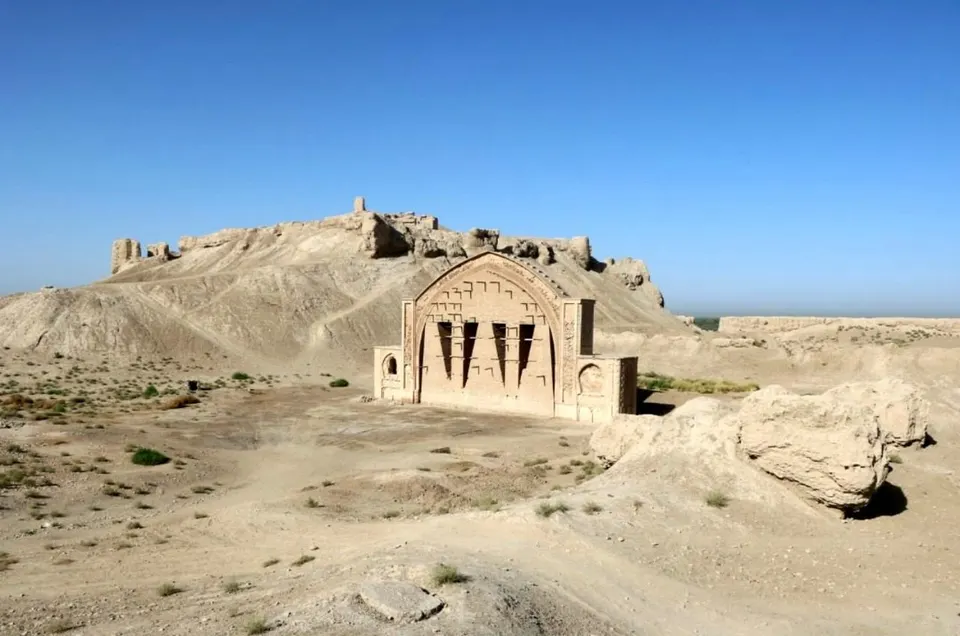
Helmand is shaped by the river that crosses its broad southern landscape and by a long history of settlement, trade and regional power. Near Lashkar Gah, the ruins of ancient Bost preserve one of the province’s most recognizable monuments.
The monumental Qala-e Bost arch dates to the medieval period and stands before the remains of the fortified city. The surrounding archaeological landscape connects with Lashkari Bazar and palace remains associated with the Ghaznavid and Ghurid eras.
The supplied photograph shows the historic arch with the fortress rising behind it. Restoration work and protected-site boundaries can affect access, so routes, opening arrangements and photography guidance should be confirmed locally before travel.
Qala-e Bost and its arch
The monumental arch of Bost is an emblem of the ancient city and one of Helmand’s best-known historic structures. Its decorated form stands beside the Helmand River and below the remains of the fortified settlement.
Lashkari Bazar heritage
North of Bost, the wider archaeological landscape includes palace and settlement remains linked with the Ghaznavid and Ghurid periods. These sites reflect the former importance of the river corridor around Lashkar Gah.
Planning your visit
Helmand can be extremely hot in summer, so the cooler months are generally more suitable for exposed archaeological sites. Confirm current access, restoration activity, protected boundaries and local travel arrangements before departure.
Further reading
https://afg.gov.af/places/qala-e-bost-arch
Highlights
- Monumental Qala-e Bost arch
- Ancient Bost fortress
- Lashkari Bazar archaeological remains
- Helmand River landscape
What is Qala-e Bost?
Qala-e Bost is the fortified archaeological site of old Bost near Lashkar Gah. Its monumental medieval arch is one of the best-known historic landmarks in Helmand.
How long should a Helmand heritage visit take?
Two days allows time for Qala-e Bost and selected nearby remains, depending on current access, restoration work and local travel conditions.
When is the best time to visit Helmand?
Late autumn and late winter to early spring generally provide more comfortable temperatures for outdoor heritage visits. Weather and access should be checked before travel.
Plan a visit
Discuss your dates, interests and preferred pace with our local team. We will confirm the itinerary and arrangements for your journey.
Ask about Helmand